 By Magni Haakon
Digital images make it possible to see almost any artwork on a screen, but they cannot fully reproduce scale, texture, material or the experience of standing in front of the original. Visiting an art exhibition gives people an opportunity to slow down, notice details and experience works in relation to one another rather than as isolated images online.
Scale Changes The Way A Work Feels
A photograph on a phone makes almost every artwork roughly the same size. In a gallery, that illusion disappears. A large installation can dominate the body and the surrounding space, while a tiny drawing may require the viewer to move closer and spend more time with it.
This physical relationship is part of the work. Artists often make deliberate decisions about scale because it changes how viewers respond. Something oversized may feel immersive or confrontational, while something small can feel private and intimate.
The same applies to distance. Some works make sense from across a room but reveal completely different details when viewed closely. Moving around them is part of the experience in a way that scrolling through images cannot replicate.
Materials Are Easier To Understand In Person
Texture is another quality that screens flatten. Paint may be heavily layered, a sculpture may combine unexpected materials, and a textile work may reveal stitching or surface detail that disappears in photographs.
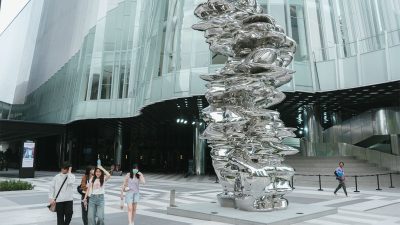
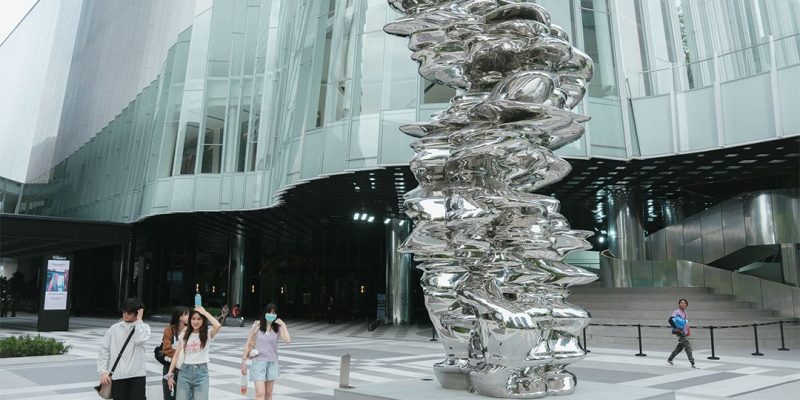
Even colour can behave differently. Lighting, surrounding walls and neighbouring artworks influence how tones are perceived. Metallic, reflective or translucent materials can be particularly difficult to reproduce accurately in digital images.
Seeing the physical object can therefore change someone’s understanding of how it was made. Brush marks, construction methods and imperfections may reveal the artist’s process in ways that are not obvious from a reproduction.
This can make contemporary work especially interesting, because materials themselves often carry part of the meaning.
Exhibitions Create Conversations Between Works

Curators rarely place artworks randomly. The order, spacing and grouping of pieces can create connections that influence how each one is understood.
Two works placed beside each other may share a theme while taking completely different approaches. Another may challenge the assumptions created by the room before it. Moving through an exhibition becomes a sequence rather than a collection of separate images.
Visitors do not need specialist art knowledge to notice these relationships. Simply asking why certain pieces may have been placed together can open up useful ways of looking.
Wall text and supporting information can provide context, but it is often worth viewing the work first and reading afterwards. This gives visitors a chance to form their own response before being told how the piece is usually interpreted.
There Is No Need To Understand Everything
One reason people sometimes avoid exhibitions is the feeling that they are supposed to understand every work. In reality, uncertainty can be part of the experience.
A piece may be immediately appealing, irritating, confusing or memorable for reasons that are difficult to explain. Those reactions are still valid. Spending time with art does not require reaching a correct answer.
The most useful approach is curiosity. Notice what attracts attention, what feels unfamiliar and what remains in memory afterwards. An exhibition becomes more rewarding when visitors stop treating it like a test and allow themselves to respond before trying to interpret.